Our Beliefs
The sole basis of our beliefs is the Bible, God's infallible written word, the sixty-six books of the Old and New Testaments. We believe that it was uniquely and fully inspired by the Holy Spirit, and that it was written without error in the original manuscripts. It is the supreme and final authority in all matters on which it speaks. We desire to allow for freedom of conviction on other doctrinal matters, provided that any interpretation is based on the Bible alone, and that no such interpretation will become an issue which hinders the ministry to which God has called us.
-
Salvation is reconciliation with God through the atoning work of Jesus Christ. God offers us salvation by His grace alone and we receive it as a gift through personal faith in the finished work of Jesus Christ. This right standing before God must be received and cannot be earned. God imputes His righteousness to those who put their faith in Christ alone for their salvation, and thereby justifies them in His sight.
It is the privilege of all who are born again of the Spirit to be assured of their salvation from the very moment in which they trust Christ as their Savior. This assurance is not based on any kind of human merit, but is produced by the witness of the Holy Spirit, who confirms in the believer the testimony of God in His written Word.
(Romans 8:38-39, Ephesians 1:13-14, 2:1-10) -
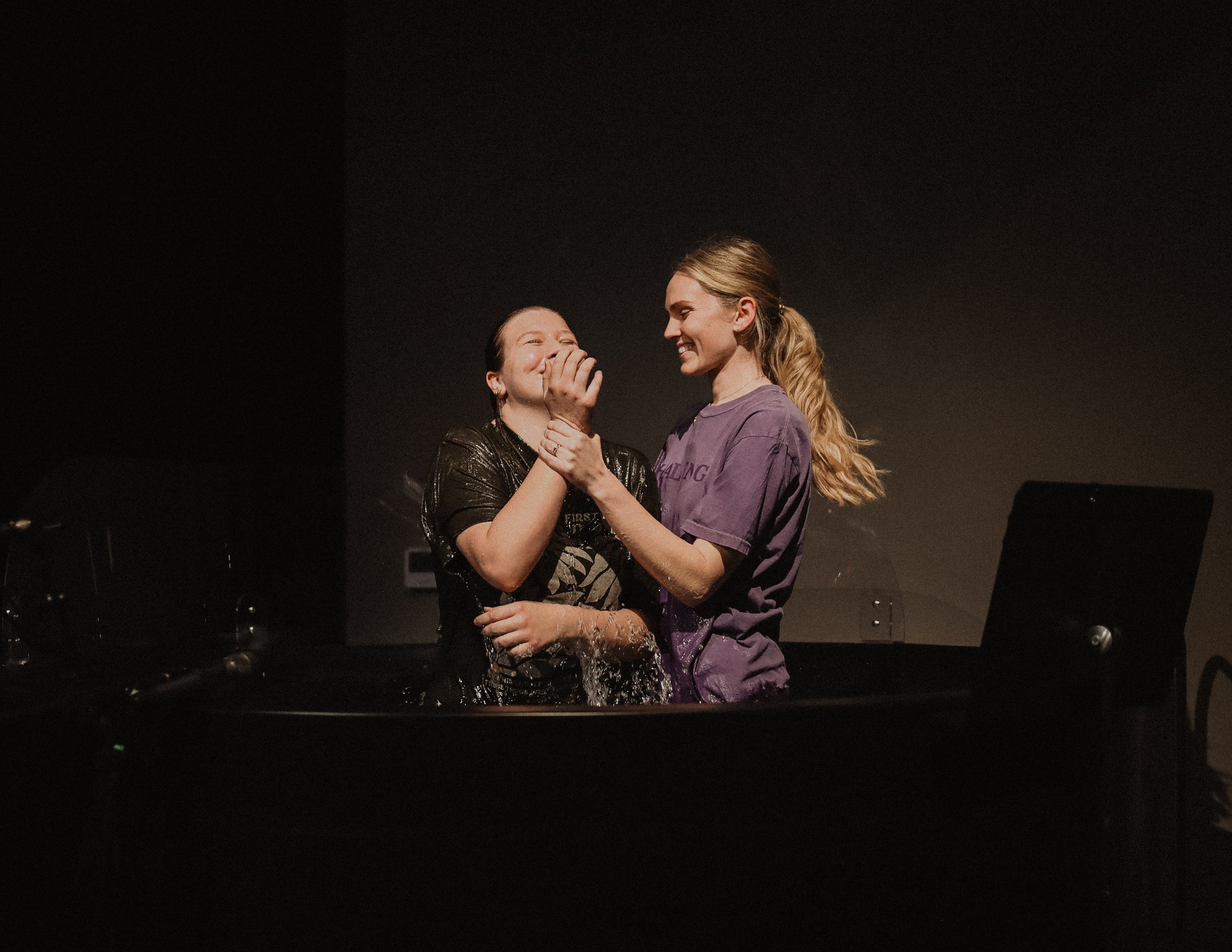
We believe baptism is an act of obedience after someone has come to saving faith in Christ. Through baptism by immersion, believers identify with Christ's death, burial, and resurrection, symbolizing their death to sin and new life in Him. Baptism is not necessary for salvation nor is a means of grace, but serves as an outward expression of the inward transformation that occurs through faith in Christ.
(Romans 6:3–4, Ephesians 2:8-9, Colossians 2:12)
-
Jesus Christ is the head of the Church, His body, which is composed of all people, living and dead, who have been joined to Him through saving faith. God wants all Christians to live out their spiritual lives in a corporate context. This context of Christian relationships is a crucial feature of our witness for Christ as it reflects God's character to the world. The church is God's chosen instrument through which the message of salvation is spread to all people.
(John 13:34, 35; 1 Corinthians 12:12-26; Matthew 28:19-20) -
At physical death the unbeliever enters into eternal, conscious separation from the Lord and awaits the resurrection of his body to everlasting judgment and condemnation.
-
Jesus Christ will come again to the earth—personally, visibly, and bodily—to consummate history and the eternal plan of God.
-
There is one true God, eternally existing in three persons—Father, Son, and Holy Spirit—each of whom possesses equally the same attributes of Deity and the characteristics of personality.
-
Jesus Christ is God, the living Word, who became flesh through His miraculous conception by the Holy Spirit and His virgin birth. Hence, He is perfect Deity and true humanity united in one person forever.
He lived a sinless life and voluntarily atoned for the sins of men by dying on the cross as their substitute, thus satisfying divine justice and accomplishing salvation for all who trust in Him.
He rose from the dead in the same body, though glorified, in which He lived and died.
(John 14:6; Acts 4:12) -
The Holy Spirit is God. He indwells us at the moment we place our faith in Christ. He empowers us to live an effective Christian life by affirming our salvation, encouraging us and giving us the strength to live a life that is pleasing to God and personally fulfilling. The Holy Spirit also endows each believer with a unique spiritual ability to serve the Church and the world.
(John 14:16; 1 Corinthians 12)
-
The Bible is the inspired word of God. The 66 books which constitute the Bible are entirely reliable and truthful, and the Bible stands as the central authority over our lives, our faith and the direction of our ministry.
(2 Timothy 3:16; Matthew 5:18)
-
Human beings are created in the image of God. As such, we are unique among all of God's creation. Through the abuse of our God-given free will, we have turned against God and this has resulted in spiritual death for all humankind. Humanity lives in a state of alienation and profound need which can only be satisfied by reconciliation with God through Christ. Without this reconciliation, all people stand under God's righteous judgment. Humanity, although fallen, maintains the image of God and is, therefore, still dignified and unique. God continues to love us and reach out to us, even though we are hostile to Him. Believers in Jesus Christ receive a new nature that becomes the foundation for a process of transformation.
(John 3:16; 2 Corinthians 5:17)